Future Proofing Municipal Websites: How Cities Can Build for What Comes Next
Building a digital foundation that can adapt to whatever your city needs next
Municipal websites have become one of a city’s most important public services. They handle everything from permits to alerts to maps, and they serve residents who expect faster answers and seamless digital experiences.
The challenge is that many city websites are built only for what the city needs today. Technology evolves. Integration demands increase. Departments change. New public expectations rise. A website that works in year one often becomes outdated by year three.
Cities need a different approach. They need websites built like infrastructure. Flexible. Modular. Ready for the integrations they cannot predict yet.
Why Traditional Website Architecture Holds Cities Back
Most municipal websites run on a monolithic CMS tied tightly to a single front-end. It seems simpler at first, but it creates friction over time.
Here is what municipal leaders should know: (future proofing municipal websites)
1. Content gets stuck in one channel
Residents expect services across web, mobile, dashboard screens, even digital kiosks. A monolithic system locks content into one format and makes reuse slow or impossible.
2. Every update becomes a heavy lift
Small content updates can trigger full code deployments. A single change can inadvertently affect unrelated parts of the site.
3. Technical debt grows quickly
By year three, the site becomes harder to update, slower to build on, and more expensive to maintain.
4. Integrations become complex
As cities add open data, GIS, IoT sensors, or permitting systems, the old architecture begins to strain.
The result is a website that is harder to manage, slower to adapt, and more costly over its lifespan.
Architectures That Keep Municipalities Adaptable
Modern website architectures give cities a way to build for flexibility, not just features.
1. Headless CMS
A headless CMS separates the content repository from the front-end. Content is delivered through APIs, which allows one piece of content to serve many channels.
Benefits for cities:
- Reuse content across web, apps, screens, and kiosks
- Update the design without altering backend systems
- Build gradually instead of replacing everything at once
Tradeoffs:
Headless systems are powerful but require stronger internal technical skills and a thoughtful editorial workflow.
2. Hybrid CMS
Many governments choose a hybrid approach. Content editors keep familiar tools while developers gain API flexibility.
This model works well when:
- Some parts of the site change slowly
- Other parts need new design or functionality
- Departments want microsites without heavy IT support
3. Composable Architecture
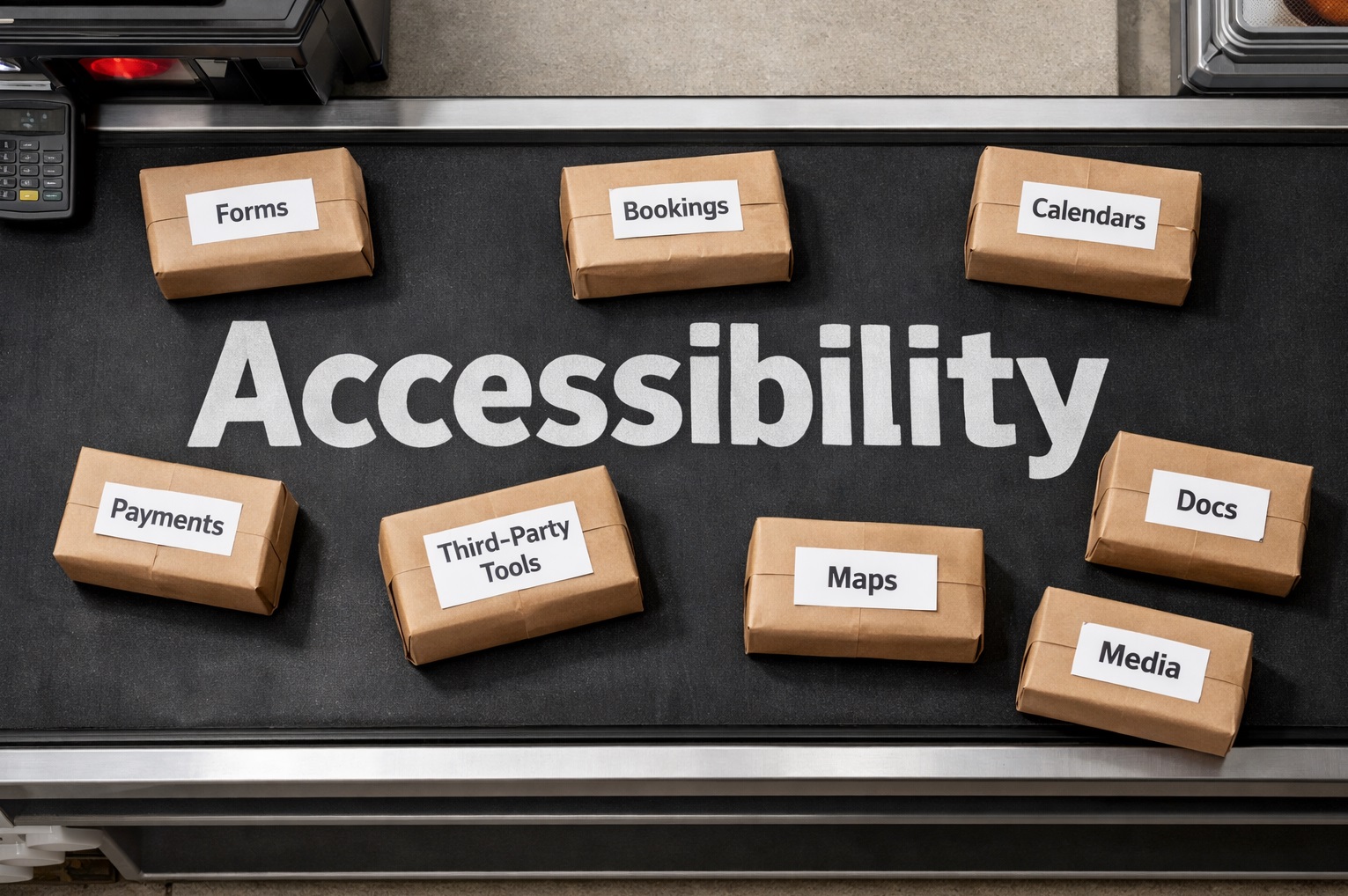
In this model, a website becomes a collection of services instead of one large system. Search, maps, forms, payments, and calendars each function independently.
Why cities benefit:
- You can upgrade or replace one service without a full rebuild
- A failure in one module does not take down the entire site
- Teams can innovate faster
This modular approach is becoming the new standard in enterprise digital ecosystems and is well-suited for municipal growth.
Case Studies and Trends from the Field
While many municipalities still rely on monolithic platforms, cities and large organizations worldwide are beginning to adopt headless and hybrid systems.
For example:
- Government agencies using hybrid CMS platforms to balance ease of use with long-term flexibility
- Organizations like Komax adopting composable architecture to speed up updates and reduce dependencies
- Cities experimenting with multi-channel delivery, powering mobile apps, kiosks, and signage from one content source
The pattern is clear. Flexible architecture is becoming the foundation for efficient digital government.
What Municipal Leaders Should Consider Before a Redesign
Before moving to a headless or modular architecture, leaders must evaluate:
1. Editorial Experience
Can content editors preview pages easily? Do they maintain control of news and public updates?
2. Performance Requirements
Will the architecture include edge caching and smart API routing to ensure fast load times?
3. Integration Governance
How will the city manage API versioning, contracts, and long-term maintenance?
4. Security and Access Controls
API-based systems must include strong authentication, permissions, and audit capabilities.
5. Staff Readiness
Do internal teams have the skills and processes to support a distributed architecture?
These considerations ensure that the technology aligns with organizational capacity and strategic goals to future proofing municipal websites.
A Practical Roadmap Modernizing & Future proofing municipal websites
Cities do not need to go from zero to fully headless in one step. A phased approach reduces risk while building long-term value.
Phase 0: Readiness Audit
Understand current systems, gaps, skills, and department needs.
Phase 1: Add APIs to the Existing CMS
Begin exposing data for mobile apps, digital signs, or new microsites.
Phase 2: Introduce a Decoupled Front-end
Start with a low-risk section, such as news or events.
Phase 3: Expand Modular Services
Break out search, maps, or calendars into separate services for easier maintenance.
Phase 4: Move to Full Composability
Treat the CMS as one part of a larger digital ecosystem.
This roadmap allows cities to modernize without disrupting operations or overwhelming staff.
Key Takeaways for Municipal Leaders
Architect for change, not just today’s needs.
Build with APIs so you can adapt to new channels and integrations over time.
Move in stages.
Hybrid models allow cities to evolve without high risk or big-bang rebuilds.
Design for reusability.
Reusable components speed up content production and maintain consistency.
Build governance around your APIs.
Clear versioning and documentation prevent technical debt down the road.
Think of the CMS as one service.
Maps, forms, alerts, payments, and calendars should be modular and replaceable.
Expect the unexpected.
Smart city sensors. AI-powered assistants. New data sources. Future integration needs are hard to predict. Your architecture should be ready for them.
Conclusion
For a City, a website is more than an information portal. It is a digital operating system that connects residents, data, and public services. If it cannot evolve, it becomes a barrier instead of an asset.
By adopting flexible, modular architecture, cities can ensure that new integrations, technologies, and expectations can be met without costly overhauls. This approach creates a website that is resilient, efficient, and ready to grow alongside the community it serves.