Making a Region Searchable: What ‘Explore the Whiteshell’ Teaches About Tourism UX
Pattern in Practice Series: Part 1 –What ‘Explore the Whiteshell’ Teaches About Tourism UX
Planning a trip should not feel like research homework.
That was the core idea behind Explore the Whiteshell.
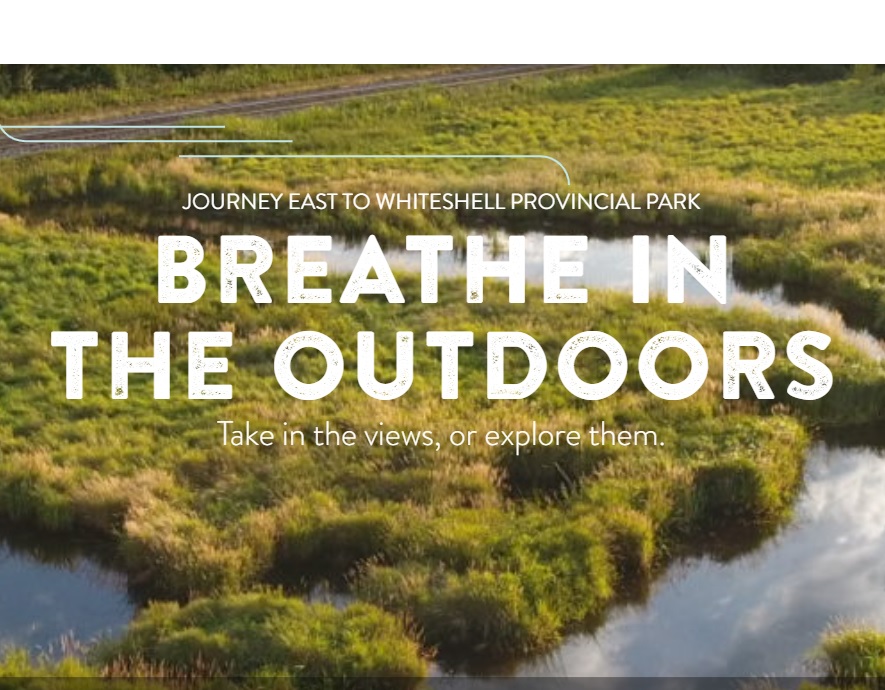
Whiteshell Provincial Park is not a single destination with one front door. It is a region. It is lakes, trails, cabins, restaurants, shops, events, campgrounds, services, history, and seasonal experiences. For visitors, that variety is the appeal. For a website, that variety creates the challenge.
How do you make a place with so many options feel easy to explore?
That was the problem Pattern helped solve.
The Explore the Whiteshell website was designed to make vacation planning feel simple, useful, and inspiring. Pattern worked with the Whiteshell team to create a user-friendly website that organized accommodations, dining, shopping, trails, and events into a more seamless visitor planning experience. The goal was not just to show what the region had to offer. The goal was to help people find what fit their trip.
Project Snapshot
Project: Explore the Whiteshell
Sector: Regional tourism / economic development
Services: UX strategy, website design, website development, search/filtering, content structure
Core Challenge: Make a large tourism region easier to search, understand, and manage
Primary Users: Visitors, tourism operators, local businesses, event organizers
Live Site: Visit Explore the Whiteshell
What Pattern delivered:
Searchable tourism directory
Visitor-focused content structure
Accommodation, food, shopping, trail, event, and service categories
Seasonal content flexibility
Business/stakeholder representation model
Mobile-friendly visitor planning experience
CMS structure for easier updates
The result:
Visitors can find relevant trip-planning information faster
Businesses are represented in a more balanced regional structure
Seasonal experiences are easier to organize and promote
The website works as both a tourism tool and an economic development asset
Regional tourism websites carry more complexity than people realize
A tourism UX website looks simple from the outside.
A visitor lands on the site. They search for a cabin. Look for a trail. Look for a place to eat. They plan a weekend.
Behind the scenes, the content structure is doing much more work.
A regional destination has multiple audiences. First-time visitors. Returning families. Hikers. Anglers. Cabin owners. Campers. Day-trippers. Winter explorers. Local businesses. Tourism operators. Event organizers.
It also has multiple seasons.
In the Whiteshell, that matters. The Province of Manitoba describes Whiteshell Provincial Park as a four-season park with rushing rivers, deep lakes, sandy beaches, jack pine, trails, golf, fishing, swimming, scuba diving, and family recreation. The park includes more than 200 lakes and multiple entry points from Winnipeg and surrounding routes.
That means the website could not be built around one generic visitor journey.
It needed to support many different trip-planning paths.
The challenge: too much value, not enough clarity
The challenge was not a lack of things to promote.
It was the opposite.
The Whiteshell area includes attractions, accommodations, restaurants, shops, trails, events, and seasonal activities. The existing experience made it difficult for visitors to quickly find relevant information. Search was not intuitive, and the site had limited visibility with people actively planning trips.
There was another important layer: stakeholder balance.
Explore the Whiteshell was developed for a consortium of companies. Each business needed fair representation. Seasonal businesses needed visibility. Year-round businesses needed visibility. No one part of the region could dominate the experience.
That is a common challenge in regional tourism, economic development, and chamber-led projects.
The website is not just a marketing tool.
It is shared infrastructure.
The solution: search, structure, and seasonal flexibility
Our team developed a dynamic search system that helps users explore accommodations, food, shopping, trails, and events. The system was designed for easier navigation, faster updates, seasonal filtering, and balanced presentation of offerings across the region.
The live site reflects that structure. Its main visitor categories include Accommodations, Festivals & Events, Trails, Food, Shopping, and Services. That gives visitors clear entry points based on what they are trying to do, not based on how the tourism industry internally organizes itself.
This matters.
Good tourism UX starts with visitor intent.
People do not usually begin with a perfect plan. They begin with questions:
Where can we stay?
What can we do with kids?
Which trails are open?
Where can we eat after a hike?
What works in winter?
What is close to the lake?
A useful regional website turns those questions into pathways.
Why history and place matter in the digital experience
The Whiteshell is not just a collection of listings.
It is a place with depth.
Explore the Whiteshell describes the park as “stories & adventures, billions of years in the making,” with 2,729 km² of lakes, rivers, Precambrian Shield, and boreal forest.
Its history includes early rail development, mineral claims near Falcon, Star, and West Hawk Lake, early cottage development around 1920, the creation of the Whiteshell Forest Reserve in 1931, and provincial park designation in 1961.
The area also includes sacred petroform sites. Manitoba Parks describes the Bannock Point Petroforms as figures laid out on bedrock in forms including turtles, snakes, humans, and abstract patterns. The same Manitoba Parks material notes that these sites are sacred places used by First Nations people for ceremonial purposes and asks visitors to treat them with respect.
For tourism organizations, this is an important reminder.
A strong digital experience should not flatten a place into a directory.
It should help people explore responsibly. It should give structure to practical information while leaving room for history, culture, and meaning.
The bigger opportunity: tourism as economic development
Regional tourism websites are often treated as marketing expenses.
They should be treated as economic development tools.
Travel Manitoba reported that Manitoba welcomed 10.6 million visitors in 2024, with visitor spending reaching a record $1.89 billion. The organization also noted that tourism creates more than 25,000 direct and indirect jobs in Manitoba and generates almost $400 million in annual provincial tax revenue.
Travel Manitoba’s industry materials describe tourism as an economic multiplier, contributing $1.89 billion in visitor spending in 2024 alone.
That puts regional tourism platforms in a larger context.
When visitors can find the right place to stay, the right trail to explore, the right restaurant to try, and the right local shop to visit, the benefit does not stop at the website.
It moves through the local economy.
Making the Whiteshell Easier to Explore
Explore the Whiteshell was not just a tourism website.
It was a way to make a complex region easier to search, easier to update, and easier for visitors to understand.
The project had to serve different kinds of users: families planning a weekend, hikers looking for trails, visitors searching for accommodations, locals checking events, and businesses that needed fair representation across the region.
It also had to account for seasonality.
Some experiences are summer-focused. Others are year-round. Some visitors arrive with a plan. Others are still figuring out what kind of trip they want to take.
That is where the real work happened.
We helped turn accommodations, food, shopping, trails, events, and services into clear pathways that supported real trip-planning behavior. Instead of making visitors sort through everything at once, the experience helped them narrow the region based on what mattered to them.
That is the real proof of work: not just launching a website, but creating a digital experience that made a regional tourism ecosystem easier to explore, easier to manage, and easier to trust.
We did not just build a tourism website.
We helped make a region easier to explore.
Have a regional tourism, destination marketing, or economic development project that needs clearer digital structure? Talk to our team about building a visitor experience that is easier to search, easier to manage, and easier to trust.
This is Part 1 of our Pattern in Practice series, exploring how thoughtful digital systems turn complex information into clearer user experiences.
Categories
- Accessibility & Inclusive Design
- Awards, Media & Recognition
- Digital Governance & Risk
- Government & Civic Technology
- Hosting, Maintenance & Website Care
- Interactive Experiences & Digital Storytelling
- Museums, Heritage, & Art Organizations
- Pattern in Practice
- Research, Prototyping & Emerging Technology
- Websites, UX & Digital Platforms