Risk Transparency Is the New Investor Confidence
Why economic development websites need to make uncertainty easier to understand
Risk transparency is becoming a stronger signal of investor confidence because it helps communities make uncertainty easier to understand.
Investors do not expect communities to be perfect. They expect communities to be clear. Before they commit more time to a location, they need to understand what could slow a project down, what infrastructure constraints may exist, how approvals work, and who can help them move through the process.
Many economic development websites avoid those questions. Others bury the answers inside planning documents, bylaws, staff directories, PDFs, and disconnected municipal pages.
That creates a problem.
When risk is hard to find, investors do not assume it does not exist. They assume it has not been organized, reviewed, or made easy to evaluate.
For small and rural municipalities, this is where a better website can create a real advantage.
Risk transparency does not weaken investor confidence. It helps build it.
Promotion creates interest. Clarity reduces uncertainty.
Most economic development websites are designed to project confidence.
They highlight available land, incentives, quality of life, location advantages, and community growth. Those messages are useful, but they only address part of the investor’s decision.
A serious investor is trying to understand whether interest can become action.
That requires more than positive language. It requires practical answers.
A website that says a community is “business-friendly” may create a good impression. A website that explains the development pathway, site readiness, servicing status, approval process, and investor support pathway creates confidence.
The distinction matters.
Promotion helps a community get noticed. Risk clarity helps a community stay in consideration.
Why risk matters more for small communities
Small and rural municipalities often compete against larger centres with more staff, larger inventories, stronger name recognition, and more developed investment attraction systems.
That does not mean they cannot compete.
It means they need to compete differently. 2025 State of Site Selection report
A smaller community may not be able to publish the largest land inventory or offer the most advanced investor platform. But it can make the investment process easier to understand. It can show where opportunities exist, what is known, what needs confirmation, and who will help coordinate next steps.
This is especially important because many small communities face constraints that are real but manageable.
Servicing may vary by site. Power capacity may require utility confirmation. Some projects may need council approval, public consultation, environmental review, or infrastructure upgrades. Workforce availability may need to be explained at a regional level rather than within municipal boundaries alone.
Those realities do not automatically make a community less attractive.
They become a problem when the investor has to discover them alone.
A strong economic development website does not pretend every site is simple. It gives investors a clearer way to understand what they are evaluating.
The website is part of the risk screen
Investors and site selectors often narrow location options before speaking with municipal staff. The website becomes part of that first screen.
If land listings are thin, approval steps are unclear, infrastructure information is vague, or contact pathways are generic, the community may feel harder to work with than it actually is.
This is one of the biggest missed opportunities in economic development website design.
The municipality may have knowledgeable staff, responsive leadership, and a practical process. But if that support is not visible online, the investor cannot factor it into the decision.
The result is avoidable friction.
A better website helps investors answer three early questions:
Can this location support the project?
What could affect timeline, cost, or feasibility?
Who can help us understand the next step?
Those questions should shape the structure of the website.
A risk-transparent economic development website does not expose every internal detail. It organizes the information investors need to evaluate timeline, infrastructure, site, and community acceptance risk.
What risk transparency should cover
Risk transparency does not mean publishing every internal detail or creating unnecessary concern. It means organizing the information investors already need to make an informed decision.
The strongest investor-facing websites help explain four areas of risk.
1. Development and approval risk
Investors need to understand how a project moves through the municipality.
This includes zoning, planning review, application intake, technical review, council or committee approvals, permits, inspections, and required supporting documents.
When this information is missing, timelines feel uncertain before the project begins.
A clear development pathway page can reduce that uncertainty. It should explain the major steps, identify which departments may be involved, clarify what makes an application complete, and show where an investor can request guidance before submitting formal materials.
This does not require the municipality to promise speed.
It requires the municipality to explain process.
That is where speed to market begins.
2. Infrastructure and servicing risk
Available land is only useful if the investor can understand whether it is ready for the intended use.
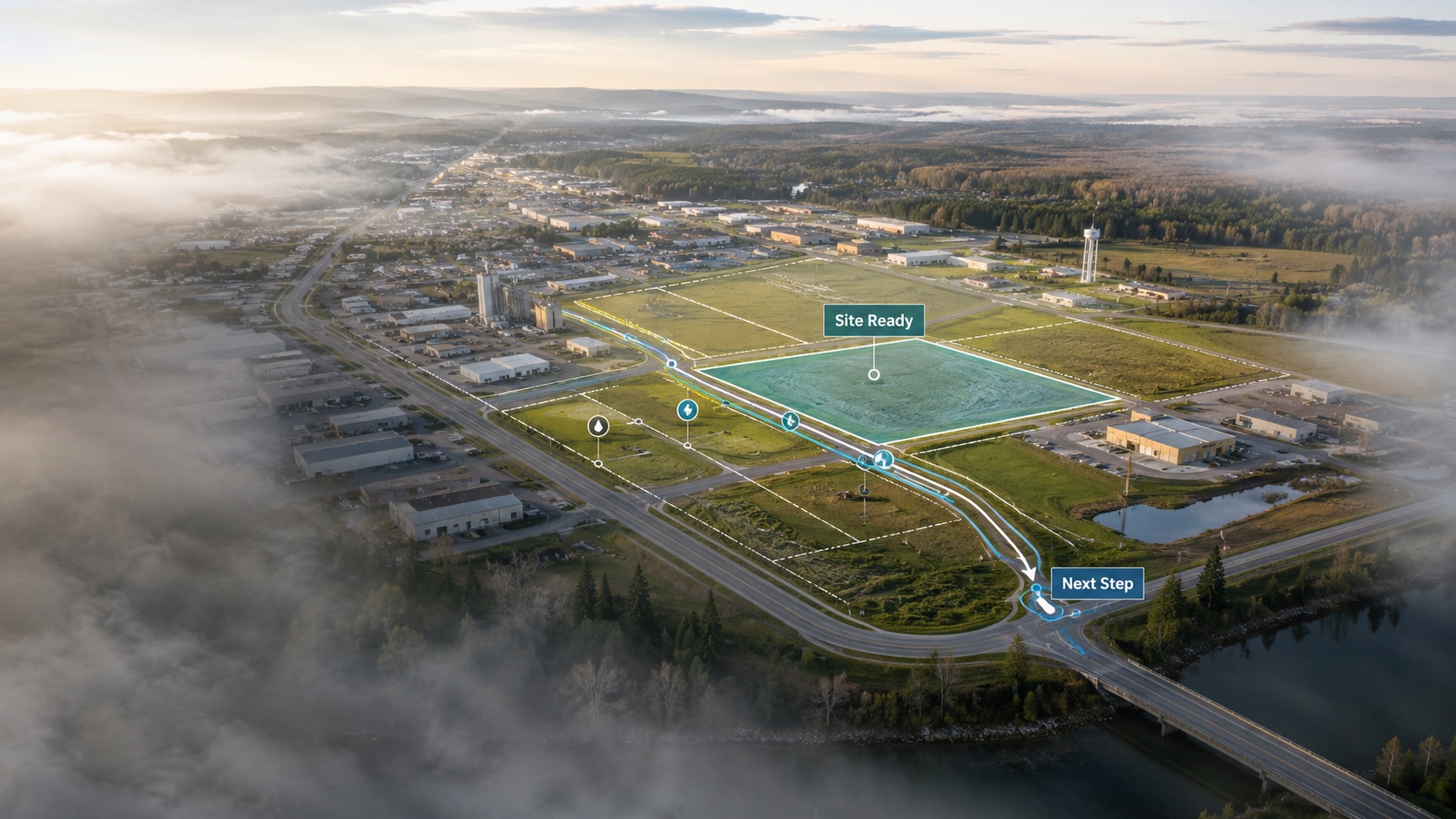
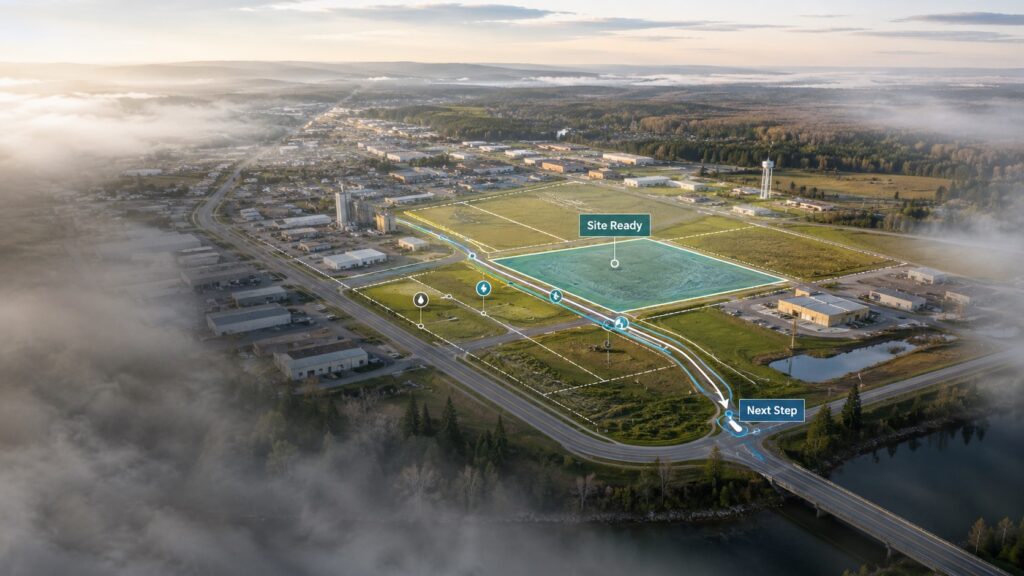
A basic land listing may include acreage, location, and ownership. A stronger site profile includes zoning, servicing status, utility availability, road access, broadband availability, known constraints, and next steps for verification.
The goal is not to overstate readiness. In many cases, the most credible answer may be that capacity requires confirmation with a utility provider or municipal department.
That is still useful.
A careful answer is better than a vague claim.
Investors can work with known constraints. Unknown constraints create hesitation.
3. Site, environmental, and climate risk
Site conditions increasingly affect investment decisions.
Floodplain considerations, stormwater capacity, drainage, wildfire exposure, environmental constraints, soil conditions, and long-term infrastructure resilience can all influence whether a project is viable.
An economic development website does not need to become a technical report. It should help investors find relevant information quickly.
That could include links to flood mapping, emergency planning, stormwater plans, conservation authority resources, environmental study requirements, infrastructure master plans, and development constraint information.
This is especially relevant for rural communities where development areas may sit near agricultural land, watercourses, rail corridors, highways, natural features, or sensitive environmental areas.
Providing this context helps investors ask better questions earlier.
4. Community acceptance risk
Projects do not move through a community in isolation.
Investors are aware that public support can affect timelines, reputation, and project feasibility. This is especially true for developments involving land-use change, truck traffic, water use, energy demand, emissions, large buildings, housing pressure, or changes to community character.
Economic development websites can help by explaining what types of investment the community is seeking and how those opportunities align with local plans.
This content serves two audiences.
It helps investors understand community priorities. It also helps residents understand how projects are evaluated, where public consultation fits, and how local benefits are considered.
Clarity at this stage can prevent confusion later.
Speed to market is a risk issue
Speed to market deserves attention because timeline uncertainty can weaken an otherwise strong opportunity.
A site may look promising. The location may be right. The community may want the investment.
But if an investor cannot understand the approval path, required studies, servicing status, or review process, the project immediately feels slower and riskier.
A municipality does not need to guarantee fast approvals to improve confidence. It needs to show how movement happens.
Useful website content may include a permit path visual, a ready-to-review checklist, pre-application meeting guidance, site readiness profiles, and clear explanations of when council or technical review may be required.
This helps investors prepare better information before they contact staff.
It can also reduce back-and-forth once the conversation starts.
In this sense, the website becomes more than a marketing tool. It becomes a preparation tool. Site Selection Analysis
The human layer makes risk easier to navigate
Information alone does not remove uncertainty.
Investors also need to know who will help them interpret the information and coordinate the next step.
This is where many economic development websites are weakest.
A generic “Contact Us” form does not explain who owns the inquiry. It does not show whether the person understands investment projects. It does not clarify how planning, public works, utilities, licensing, finance, and external partners may be coordinated.
For small communities, this is a major opportunity.
Larger centres may have more resources, but smaller municipalities can often offer more direct access and faster coordination. That advantage should be visible online.
A stronger investor support pathway should explain:
- who the primary contact is
- what they can help with
- how quickly inquiries are typically acknowledged
- what happens after the first conversation
- which departments may be involved
- what information investors should prepare
- how site visits, referrals, or next-step meetings are handled
The contact experience should not feel like an administrative endpoint.
It should feel like a guided entry point.
What a risk-transparent EDO website should include
Small and rural municipalities do not need a complex digital platform to improve investor confidence. They need a clearer structure and a better content strategy.
A practical first version could include the following sections.
Development readiness page
Explain how development works in the municipality. Use plain language. Show the major steps. Link to the documents investors need most. Identify who can answer questions before formal submission.
Stronger site profiles
Move beyond acreage and location. Add zoning, servicing, ownership, access, utility notes, known constraints, environmental study status, and next steps.
Infrastructure overview
Summarize power, water, wastewater, broadband, transportation, natural gas, and planned upgrades where relevant. Be clear about what is confirmed and what requires further validation.
Permit path visual
Show the typical path from inquiry to pre-application discussion, intake, review, decision, permitting, and construction. Include notes about common causes of delay.
Investor intake pathway
Replace the generic contact experience with a clear pathway for serious inquiries. Include a named contact, response expectation, and a simple way to request a conversation.
“How we help” section
Explain the role of the economic development team. This may include site selection support, zoning guidance, development process navigation, funding referrals, regional introductions, and coordination with municipal departments.
Case studies
Use short examples that show how the municipality helped a business move forward. Focus on the challenge, the support provided, and the outcome.
Maintenance plan
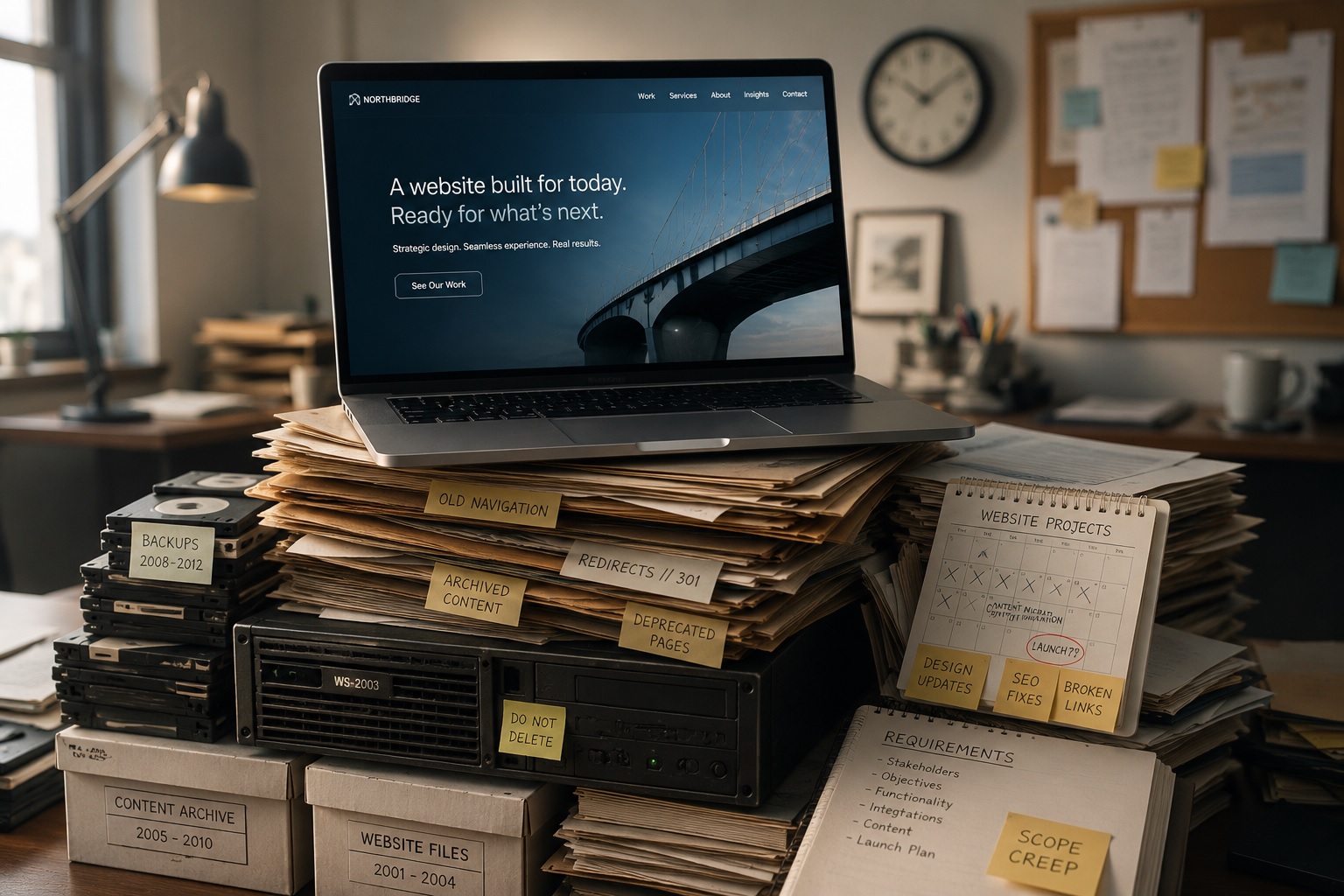
Assign responsibility for keeping listings, contacts, process pages, fee links, planning documents, and infrastructure notes current. Outdated information can create more doubt than missing information.
The goal is manageable risk, not risk-free messaging
No municipality can remove every constraint from the investment process.
That is not the purpose of an economic development website.
The purpose is to help investors understand whether a project is worth advancing and what needs to happen next.
Risk transparency helps because it changes the investor experience. Instead of searching through disconnected information, the investor can evaluate the opportunity in a more organized way. Or guessing who to contact, they can see a clear support pathway. Instead of discovering constraints late, they can understand the main issues earlier.
That creates a stronger relationship from the beginning.
It also signals that the municipality understands the realities of development.
From brochure to decision engine
The strongest economic development websites do not stop at promotion.
They help investors evaluate fit, understand constraints, prepare for approvals, and connect with the right people.
For small and rural municipalities, this is a practical competitive advantage. They may not be able to compete with larger centres on scale, staff size, or visibility. But they can compete on clarity.
That clarity matters most when the decision is complex.
A risk-transparent website shows that the community is organized, realistic, and ready to help. It gives investors enough confidence to keep asking questions instead of moving on.
That is the real shift from brochure to decision engine.
Not more content.
Better answers.
How can we help you?
For economic development teams, that means building websites that support investor confidence, not just community promotion.
Because the communities that win attention are not always the ones with the biggest promise.
Categories
- Accessibility & Inclusive Design
- Awards, Media & Recognition
- Digital Governance & Risk
- Government & Civic Technology
- Hosting, Maintenance & Website Care
- Interactive Experiences & Digital Storytelling
- Museums, Heritage, & Art Organizations
- Pattern in Practice
- Research, Prototyping & Emerging Technology
- Websites, UX & Digital Platforms